“Is mortality a threat or a catalyst?”
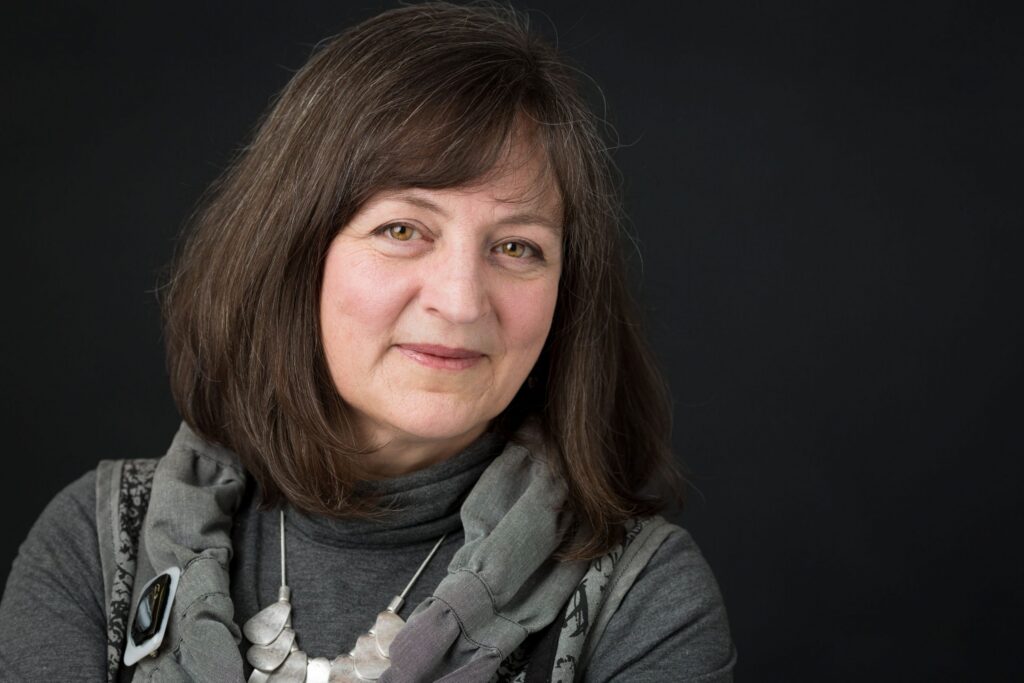
Kathryn Mannix
“Is mortality a threat or a catalyst?”
Kathryn Mannix
Palliative Care Physician & Writer
Join Our Substack
Click here to join our Substack Positively Maladjusted.
Executive Summary
In this interview from the Examined Life podcast, host Kenny Primrose speaks with Kathryn Mannix, a retired palliative care physician and author of With the End in Mind and Listen. The conversation centres on a central, provocative question: “Do we see our mortality as a threat or as a catalyst?”.
Kathryn Mannix discusses how modern society has lost its “death literacy,” leading to a culture of avoidance and “magical thinking” where people fear that talking about death might manifest it. Drawing on her background in cognitive behavioral therapy (CBT), she explains that leaning into the reality of death—rather than treating it as a threat to be shunned—can serve as a catalyst for a more mindful, grateful, and emotionally integrated life. They explore the importance of “doing the work” of emotional processing, the concept of regret as a “safe harbor,” and the power of being a compassionate “companion” to those in distress.
Kenny Primrose: Kathryn Mannix, it’s such a pleasure to have you join me on the Examined Life podcast. I couldn’t think of a better person for a series on death, dying, grief, and loss. You have spent a long career in palliative care and have written fantastic books like With the End in Mind and Listen. You seem to be on a mission to change the way we approach and think about death. The theme of this podcast is to ask interviewees to distill their wisdom into a helpful question. Is there a question that bubbles up for you?
Kathryn Mannix: Thank you. I wish I could have just said “yes” immediately, but I’ve been thinking about this for so long that I’ve had to distill it down from some very clunky ideas. The question I’ve come down to is: Do we see our mortality as a threat or as a catalyst?
Kenny Primrose: What a great question. Perhaps we should begin with yourself—has your view of mortality changed over the course of your career?
Kathryn Mannix: Yes, it has. I’ve long suspected that we gravitate toward or shun the things that trouble us. I suspect I gravitated toward looking after dying humans because, initially, I was resentful and fearful of death. It’s like learning to sleep in the dark; once you show the “monsters” you aren’t frightened, they lose their power.
Early in my medical training on a leukemia ward, I noticed “medical abandonment”. Doctors would tiptoed past the beds of the dying, while nurses were the ones staying in the room. I had a crisis thinking I’d chosen the wrong career until those nurses taught me that the most important thing isn’t what you do, but how you are. Once I became comfortable with my own powerlessness, I could help other doctors be better at the bedside. Over the 20th century, we lost familiarity with dying. Mortality was once a threat to me, but it became a catalyst for changing how I approach the bedside—and for realizing that every moment is unique and transient.
Kenny Primrose: The idea of death as a threat resonates. I’ve spent much of my life avoiding the thought of it, even when it visited me through the loss of my mother, uncle, and sister-in-law. There is something almost superstitious in our fear—a worry that talking about it “tempts fate”. Could you tell me more about that sense of threat?
Kathryn Mannix: As a cognitive behavioral psychotherapist, I’ve seen how people are overwhelmed by the approach of death. We have a concept called magical thinking, which is common in children but often persists in adults. We don’t buy baby goods during a pregnancy “just in case,” as if that would prejudice the outcome. We worry that talking about dying makes it manifest. While I don’t believe talking about it makes us die sooner, it does make us notice our own changes, which can be scary. I use humor to help people “creep toward” the things they fear so they can eventually bear to think about them.
Kenny Primrose: I can feel that irrationality in me. When we lose agency, we reach for magical thinking to get a sense of control. How much of that Surfaces at the bedside?
Kathryn Mannix: It’s a major feature. People are afraid of what they don’t know, and they often expect a “Hollywood-style” or dramatic soap opera version of death. I used to be cross about the inaccuracy of screen deaths until I spoke with Carriad Lloyd. She pointed out that in drama, death is a plot device used to bring characters together; it’s not actually about the dying process.
Describing “ordinary dying” is often a huge relief. I use storytelling in my books to hold people safe while they learn what happens. Just as we have “mind maps” for pregnancy, we need them for dying. The process of dying is generally not one of discomfort; while you may die of something uncomfortable, the act of dying itself is usually just a gradual loss of consciousness.
At the end of life, many people do an “end-of-life audit”. They look back at their principles and achievements. As cognitive therapists, we call it selective abstraction when a person only notices the “sad files” in their memory cabinet because their mood is low. We help them look at the whole system and find forgiveness for the times they didn’t step up.
Kenny Primrose: So we’ve lost death literacy because we no longer see the process at home. Making the unspeakable speakable “defangs” the threat. This brings to mind Bronnie Ware’s work on the regrets of the dying. Does that resonate with you?
Kathryn Mannix: I take a slightly different view on regret. I think regret gets a bad rap. If you get to the end with no regrets, you probably never got out of your box. Most people look back and yearn for the path not taken. However, I’ve met a few people stuck in devastation—filled with fury or self-hate at the edge of life.
Most people, however, process their experiences to reach a quieter place. Regret is the safe place we get to when we’ve done the work of processing the things that had the potential to harm us. Regrets are the processed scars of difficult things we wish hadn’t happened. Trying to live with “no regrets” isn’t productive; the goal is to process harms so they become “acceptable regrets”.
Kenny Primrose: That’s a counterintuitive line—that regret is a safe place. By avoiding these conversations, do we avoid the wisdom of contemplating our mortality?
Kathryn Mannix: That’s what turns it into a catalyst. Knowing life is limited helps us decide what we want to achieve or set at rest. But “doing the work” means sitting in the discomfort of strong emotions. We learn emotional literacy as children, but as adults, we “socially polish” our feelings. Until we go through the “dark night of the soul” following a loss, we can’t learn to live alongside it. Using the metaphor of a storm at sea: the loss might put a hole in your boat, but that repair becomes part of what keeps you afloat.
Cognitive therapy asks us to revisit distress to see if our thoughts—like “I am the worst person in the world”—are actually true. When we bring thoughts back to “sea level,” our emotions regulate.
Kenny Primrose: It sounds like deep work to resolve a conflicted inner life so you can live by your values now.
Kathryn Mannix: Exactly. We often judge ourselves more harshly than anyone else. Sometimes the work is simply about “introducing you to yourself” and speaking to yourself as you would a friend. We need to find the “loving version of the judge” who acknowledges our mistakes but also our virtues.
Kenny Primrose: There seems to be a societal “conspiracy” to avoid these hard things. I wonder how we can create spaces for this work.
Kathryn Mannix: We have a “culture of kindness” that mistakenly tries to stop people from feeling bad. When someone is grieving, we often say, “Don’t cry, it will be okay,” which shuts them down. I remember a classmate in medical school weeping because her mother died, and I tried to reassure her. But she didn’t need reassurance; she needed to be distraught. We should be companions who accompany people in the way they prefer. We have become “fixers” because we have pills and search engines to avoid misery. But we aren’t weak for being distressed; we are whole.
Kenny Primrose: When my mother died when I was 21, I tried to reframe it by saying I was just glad I had her for those years. People called that “strength of character,” but it was really just distraction. Did that detach me from myself?
Kathryn Mannix: I think that’s a fair comment. Telling our story aloud helps us sequence events and understand them. If you get shut down, you never have that conversation with yourself. Many people I meet at the end of life find that things they never dealt with resurface in the “audit” because the work wasn’t done.
Kenny Primrose: To return to the catalyst—recognizing our finitude makes every moment count. It’s like the “pointy end” of a holiday where you know you only have a few days left.
Kathryn Mannix: Yes. Wise people—elders—have a groundedness because they’ve worked out what matters. The catalyst is the realization: “This is it.” You can embrace it or anesthetize yourself. In chemistry, a catalyst changes the reaction but isn’t changed itself. Death remains on the horizon; we aren’t making ourselves immortal. But by changing our reaction to it, we can become the best versions of ourselves. Gratitude is the treasure that the catalyst of dying gifts to us.
Kenny Primrose: That is a beautiful place to end. Thank you so much for joining me today
Kathryn Mannix: Thanks, Kenny. It’s been lovely to talk to you.